
The Tool Overload Epidemic: Why 2026 Forced Freelancers and Creators to Consolidate Their Digital Workflows
Freelancers, creators, and virtual assistants in 2026 face significant operational strain from managing an average of 12–22 digital tools and spending up to $600 monthly on subscriptions. Industry reports link this fragmentation to burnout, lost billable hours, and reduced profitability across the solo-business ecosystem.
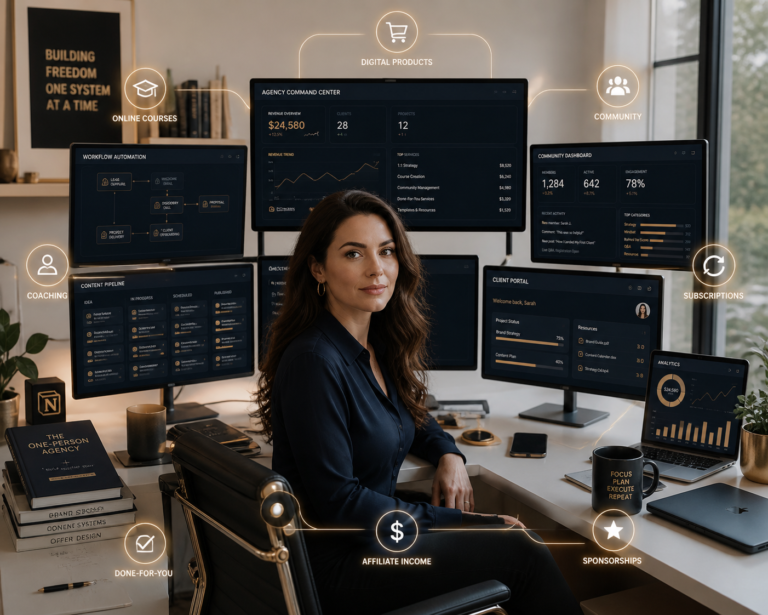
In response, consolidation emerged as a defining trend, with solo operators moving toward unified platforms, centralized dashboards, and system-level workflows. The shift reflects a broader recognition that tool overload is an infrastructure problem, and that sustainable productivity depends on fewer, better-integrated tools rather than more of them.
If 2020–2024 was the era of “there’s an app for that,” then 2025–2026 became the era of “there are too many apps for that.” Freelancers, virtual assistants, and creators entered 2026 drowning in subscriptions, dashboards, notifications, and overlapping SaaS tools. What was once marketed as “productivity” quietly became one of the biggest operational burdens in the solo‑business ecosystem.
Tool overload isn’t a minor inconvenience. It’s an economic drain, a cognitive tax, and one of the most underestimated causes of burnout and workflow instability across the freelance and creator economies.
And in 2026, the industry finally started talking about it.
The Average Solo Operator Uses 12–22 Tools — and Pays for 6–12 Subscriptions
Multiple industry reports confirm what freelancers and creators have been complaining about for years:
- Freelancers use an average of 12–15 tools to manage client work (Zapier, State of Automation, 2025).
- Creators use 18–22 tools across content creation, analytics, publishing, and monetization (HubSpot, Creator Economy Report, 2025).
- Virtual assistants use 10–14 tools per client, often across multiple clients (Fiverr, Business Trends 2026).
- Solo operators spend $180–$600/month on software subscriptions (Pew Research Center, Digital Work & Costs Study, 2025).
This isn’t “productivity.” It’s fragmentation.
And fragmentation has consequences.
Tool Overload Is Now a Documented Cause of Burnout
Adobe’s Future of Creativity Study 2025 found that:
- 41% of creators cite “too many tools” as a major source of stress.
- 34% say switching tools disrupts creative flow.
- 29% say tool fragmentation directly contributes to burnout.
For freelancers, the numbers are similar. Upwork’s Freelance Forward 2025 notes that:
- 1 in 3 freelancers feel overwhelmed by the number of platforms they must manage.
- 27% say tool switching reduces billable hours.
- 22% say subscription costs impact profitability.
Virtual assistants feel the pressure most intensely. They manage tools for themselves and for clients — often with conflicting workflows, logins, and expectations.
The Hidden Costs: Time, Money, and Cognitive Load
1. Time Loss
McKinsey’s Future of Work Productivity Report 2025 estimates that tool switching consumes 9–14% of a worker’s day. For solo operators, that’s unpaid time.
2. Subscription Sprawl
The average creator pays for:
- editing tools
- scheduling tools
- analytics tools
- CRM tools
- automation tools
- storage tools
- community platforms
- AI assistants
Many of these overlap. Few integrate cleanly.
3. Cognitive Load
Every new tool adds:
- a new interface
- a new workflow
- a new learning curve
- a new set of notifications
- a new set of failure points
This cognitive load compounds — especially for freelancers and VAs juggling multiple clients.
4. Workflow Instability
When tools don’t integrate, workflows break. When workflows break, output slows. When output slows, revenue drops.
This is the quiet economic cost of tool overload.
Creators Are the Most Affected — and the Most Vocal
Creators operate across:
- TikTok
- YouTube
- X
- Patreon
- OnlyFans
- Discord
- Shopify
- Kajabi
- Linktree
- Notion
- CapCut
- Premiere Pro
- Canva
- AI tools (ChatGPT, Midjourney, Runway, etc.)
HubSpot’s 2025 report found that creators manage 5–12 platforms daily, often switching between tools every 3–7 minutes during production cycles.
This is not sustainable. And creators know it.
The rise of “creator burnout” headlines in 2025–2026 (The Verge, Rolling Stone, Bloomberg) often cite tool overload as a root cause — not just content pressure.
Freelancers Are Quietly Building Micro‑Agencies — and Feeling the Pain
Freelancers increasingly operate like agencies:
- multiple clients
- multiple deliverables
- multiple platforms
- multiple workflows
But unlike agencies, freelancers don’t have:
- project managers
- operations teams
- workflow architects
- automation specialists
They have themselves — and a pile of tools.
This mismatch creates operational drag that directly impacts income.
Virtual Assistants Are the Ones Holding Everything Together
VAs are the glue in the solo‑business ecosystem. But glue stretches — and eventually snaps.
VAs report:
- managing 20–40 logins across clients
- maintaining dozens of dashboards
- switching tools hundreds of times per day
- learning new tools monthly
- dealing with inconsistent client workflows
- absorbing the fallout when tools break
Fiverr’s 2026 report shows VA burnout rising sharply — not because of workload volume, but because of workflow fragmentation.
2026 Is the Year Consolidation Became a Priority
Across the industry, consolidation became a theme:
- Creators moved toward all‑in‑one platforms like Kajabi, Circle, and Shopify.
- Freelancers adopted unified CRMs like Bonsai and Motion.
- VAs built centralized dashboards to manage client work.
- Micro‑agencies standardized workflows across clients.
- Adult creators shifted to private, unified platforms to reduce volatility.
The industry finally recognized that fragmentation is not a productivity problem — it’s an infrastructure problem.
And infrastructure problems require operating systems, not more apps.
This is where FluenceOS fits quietly into the narrative: not as a “new tool,” but as a consolidation layer that reduces cognitive load and stabilizes workflows.
The Future: Fewer Tools, More Systems
The next phase of the solo‑business ecosystem will be defined by:
- unified dashboards
- integrated workflows
- automation‑first operations
- AI‑assisted orchestration
- platform‑agnostic publishing
- subscription consolidation
- system‑level thinking
The winners won’t be the ones with the most tools. They’ll be the ones with the fewest — and the clearest systems.