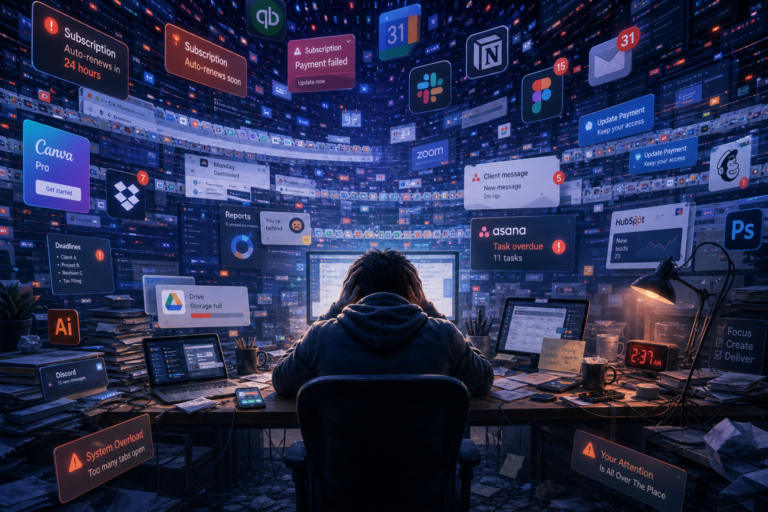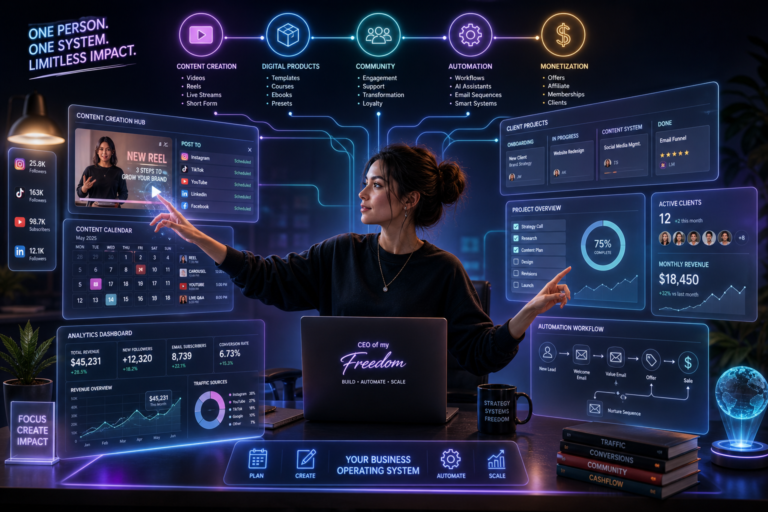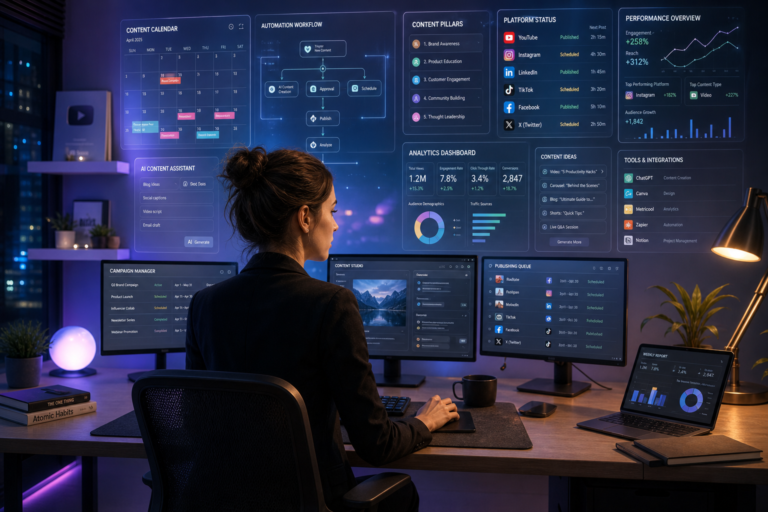
The Quiet Crisis of Creator Burnout: Why 2026 Forced Solo Operators to Rethink Their Workflows
Burnout has always been part of the creator economy, but 2026 is the first year it became a measurable economic threat. The numbers are no longer anecdotal — they’re documented across industry research from HubSpot, Adobe, YouTube, and independent creator‑economy analysts.
This isn’t about “working too hard.” It’s about an industry built on velocity, volatility, and visibility — and the human cost of sustaining it.
Burnout Is Now Quantified, Not Assumed
HubSpot’s State of the Creator Economy 2025 reports:
- 62% of full‑time creators experience burnout symptoms
- TikTok creators burn out 40% faster due to platform velocity
- AI adoption among creators sits at 84–86%, raising output expectations
Adobe’s Future of Creativity Study echoes the same trend: creators feel pressure to produce more content across more platforms with fewer resources.
The creator economy’s growth — projected to reach $480 billion by 2027 (Goldman Sachs, 2025) — has intensified pressure rather than alleviated it.
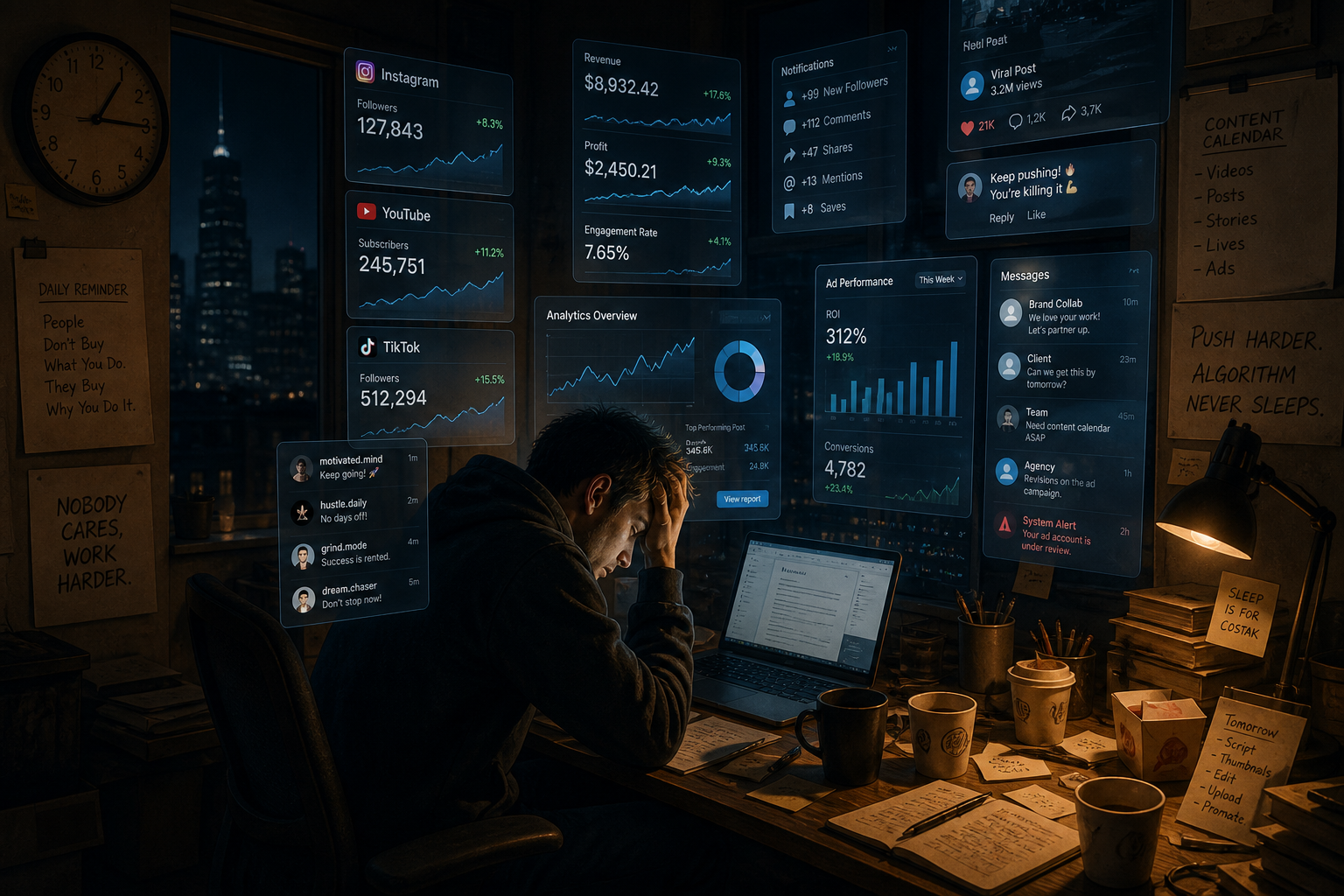
The Algorithm Is the New Boss — And It Never Sleeps
Creators aren’t competing with each other; they’re competing with the feed.
Platforms reward:
- frequency
- consistency
- novelty
- multi‑format output
- cross‑platform presence
And punish:
- breaks
- experimentation
- slow cycles
- niche shifts
Freelancers who rely on content for client acquisition feel the same pressure. Virtual assistants supporting creators absorb the overflow. Adult creators, who face additional platform restrictions, experience burnout at even higher rates (Rolling Stone, The Hidden Labor of Adult Creators, 2025).
The Hidden Burnout Drivers No One Talks About
1. Platform Volatility
Creators face sudden policy changes, demonetization, and algorithm shifts. Adult creators face payment bans and content takedowns (Mashable, 2025).
2. Multi‑Platform Fragmentation
The average creator manages 5–12 platforms (Kajabi, 2025).
3. Audience Expectations
Parasocial dynamics intensify pressure for constant engagement.
4. AI Acceleration
AI increases output expectations. When nearly all creators adopt AI (HubSpot, 2025), the baseline shifts.
5. Economic Instability
Revenue‑share volatility remains a structural risk (YouTube Creator Liaison Report, 2025).
Burnout isn’t caused by “too much work.” It’s caused by too many missing systems.
Freelancers Are Burning Out Too — Just More Quietly
Freelancers often avoid the burnout conversation, but Upwork’s Freelance Forward 2025 shows:
- rising stress levels
- increased client‑communication demands
- multi‑client context switching
- content creation pressure
- tool overload
Their businesses increasingly resemble creator businesses — without the infrastructure.
Virtual Assistants: The Industry’s Shock Absorbers
VAs absorb:
- scheduling chaos
- content overflow
- community moderation
- research demands
- brand logistics
Fiverr’s 2026 report shows VA workloads rising across all creator‑adjacent categories.
Without structured workflows, VAs risk becoming the next burnout wave.
Adult Creators: The Burnout Frontline
Adult creators face:
- payment processor instability
- platform bans
- content restrictions
- higher moderation demands
OnlyFans’ 2025 transparency report highlights the emotional and operational toll of constant platform volatility.
Their workflows resemble micro‑businesses — and their burnout foreshadows the broader industry.
Burnout Is Forcing Infrastructure
Burnout is pushing:
- creators toward structured workflows
- freelancers toward automation
- VAs toward specialization
- adult creators toward private platforms
- teams toward unified operating systems
This is the moment where infrastructure becomes the differentiator. Not hype. Not virality. Just systems that reduce cognitive load.
FluenceOS fits into this moment quietly — as the operational clarity solo operators increasingly need.