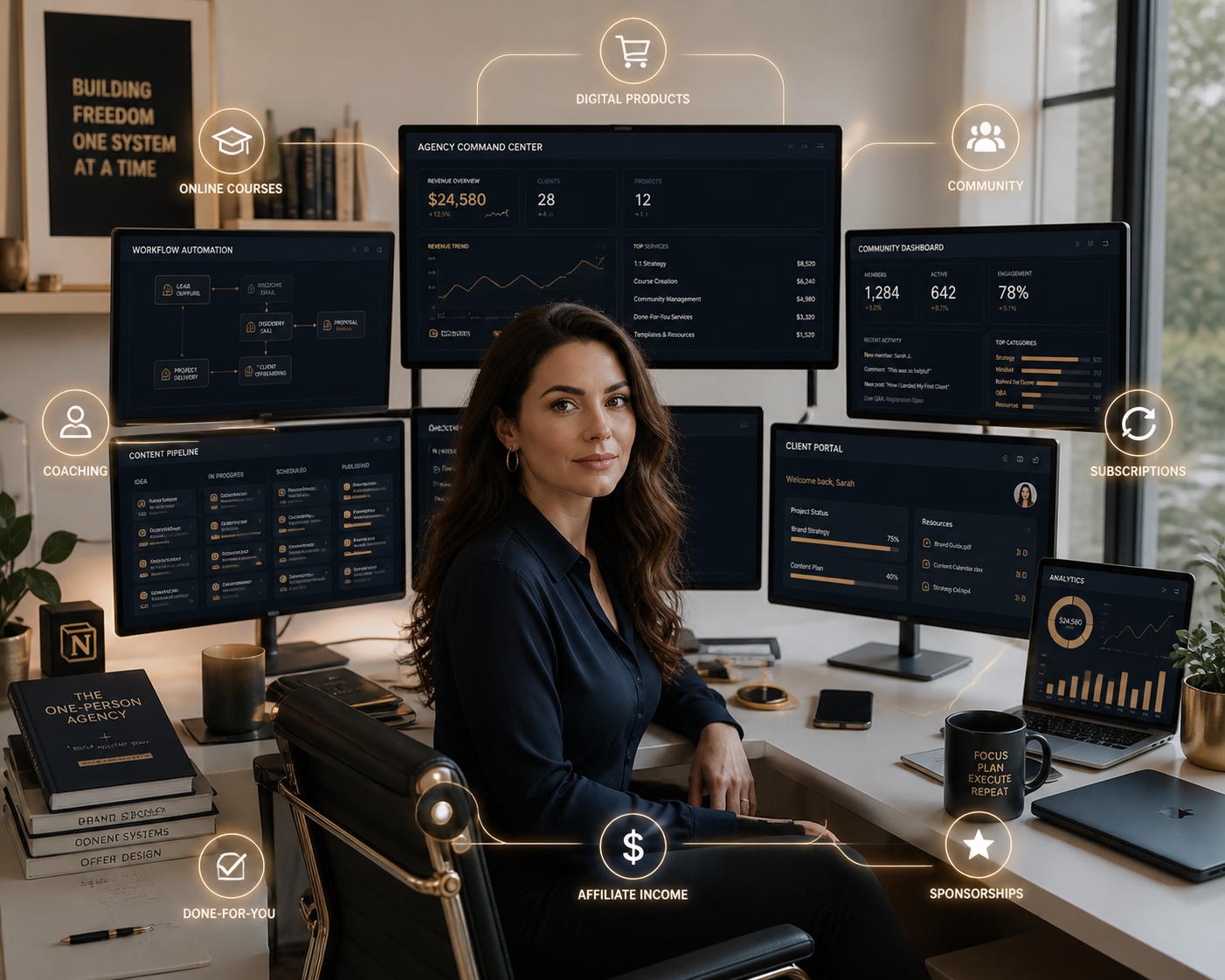
The Rise of the Solo Agency: How Freelancers, VAs, and Creators Are Quietly Rebuilding the Future of Work in 2026
Independent workers are increasingly operating as solo agencies, combining client services, digital products, subscriptions, and community management into multi-revenue businesses. Data from MBO Partners and Upwork show over 72 million Americans now engage in freelance work, with high earners growing 53% over five years.
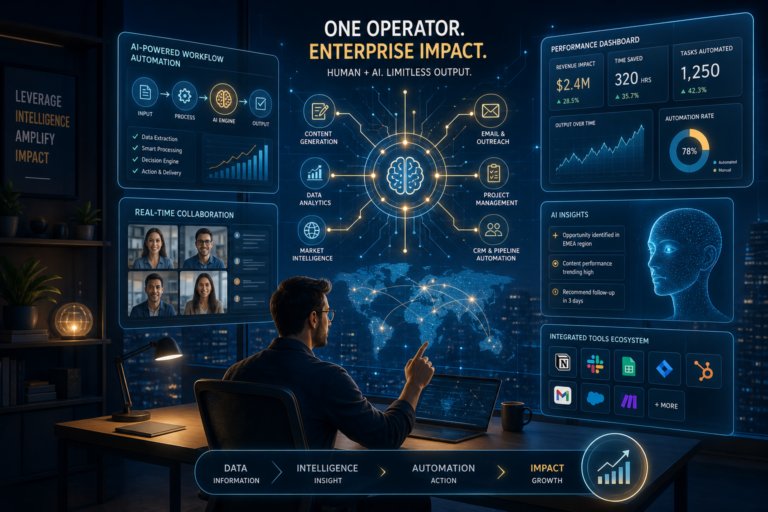
AI tools and virtual assistants have expanded solo operators’ capacity, enabling individuals to manage agency-level complexity without full teams. The primary challenge is infrastructure, as operators average 12–22 tools and lose significant productivity to workflow fragmentation.
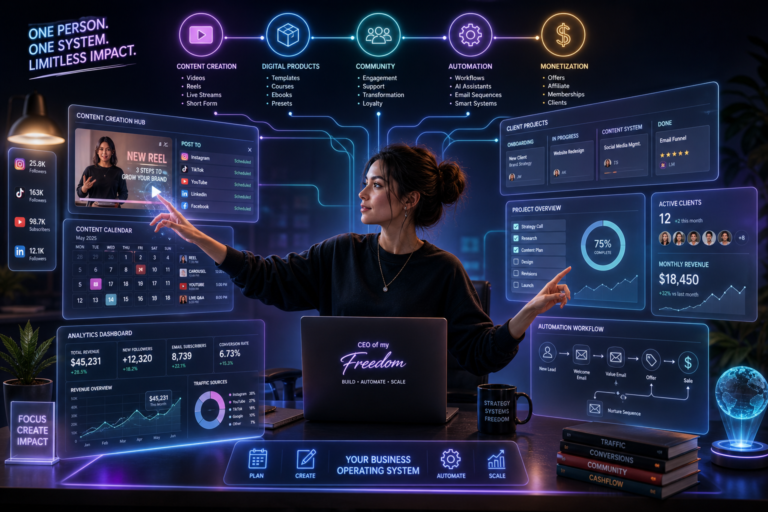
The most important shift in the freelance and creator economies isn’t happening on TikTok, Instagram, or Upwork. It’s happening in the quiet, unglamorous corners of digital work — inside Notion dashboards, Airtable bases, Discord servers, and private client portals. In 2026, freelancers, virtual assistants, and creators are converging into a new archetype: the solo agency.
This isn’t a buzzword. It’s a structural evolution driven by economics, technology, and the collapse of traditional employment pathways. And it’s reshaping how digital labor is organized, monetized, and scaled.
The Solo Agency Is the New Middle Class of Digital Work
Freelancers and creators are no longer “gig workers.” They’re small businesses — often earning more than traditional employees, and operating with the complexity of boutique agencies.
According to MBO Partners’ State of Independence 2025:
- 5.6 million U.S. independents earn $100K+ per year
- High‑earning independents grew 53% over five years
- Solo businesses are the fastest‑growing segment of the U.S. workforce
Upwork’s Freelance Forward 2025 adds:
- 72.9 million Americans now participate in independent work
- 41% of the U.S. workforce engages in freelance activity
- Freelancers increasingly rely on digital infrastructure to scale
This is not a side hustle economy. It’s a structural workforce shift.
Creators Are Becoming Agencies — Without Calling Themselves Agencies
Creators now manage:
- content production
- editing pipelines
- community engagement
- sponsorship negotiations
- digital product ecosystems
- subscription platforms
- analytics dashboards
- multi‑platform publishing
Kajabi’s State of the Creator Economy 2025 found:
- creators earning $150K+ operate with agency‑level complexity
- 47% employ at least one virtual assistant
- 19% employ two or more
Creators aren’t influencers. They’re production studios.
And production studios need operators, workflows, and systems — not just creativity.
Virtual Assistants Are Becoming Operations Managers
The VA role has evolved from administrative support to operational leadership.
Fiverr’s Business Trends 2026 shows:
- creator‑focused VA roles grew 212% YoY
- VAs increasingly manage content calendars, automation tools, and community operations
- VAs are now embedded in creator businesses as strategic partners
This shift mirrors the rise of “Chief of Staff for Creators” roles emerging across YouTube, TikTok, and OnlyFans ecosystems.
VAs aren’t assistants. They’re operators.
Adult Creators Are the Blueprint for the Solo Agency Model
Adult creators have been running solo agencies for years — out of necessity.
Rolling Stone’s The Hidden Labor of Adult Creators (2025) documents:
- multi‑platform redundancy
- private community management
- subscription funnels
- custom content workflows
- high‑volume messaging
- compliance and moderation
- operational assistants
OnlyFans’ Transparency Report 2025 notes that top creators often employ 1–3 VAs, forming micro‑agencies that rival small production teams.
Their operational sophistication is not fringe — it’s a preview of the future of all creator businesses.
AI Is the Catalyst Turning Solo Operators Into Agencies
AI didn’t replace freelancers or creators. It expanded their capacity.
HubSpot’s AI in Marketing Report 2025 found:
- creators using AI produce 3×–10× more content
- freelancers using AI complete 30–50% more client work
- VAs using AI automate 20–40% of repetitive tasks
AI has become:
- the editor
- the researcher
- the strategist
- the assistant
- the analyst
This allows solo operators to scale like agencies — without hiring full teams.
But scaling requires structure. And structure requires an operating system.
The Solo Agency Model Has Three Defining Characteristics
1. Multi‑Revenue Streams
Freelancers and creators now combine:
- client work
- digital products
- subscriptions
- sponsorships
- consulting
- community monetization
This diversification mirrors agency economics.
2. Multi‑Platform Presence
Solo agencies operate across:
- social platforms
- private communities
- email lists
- subscription sites
- marketplaces
- storefronts
This requires orchestration — not improvisation.
3. Multi‑Role Identity
Solo operators are:
- strategist
- creator
- editor
- marketer
- operator
- analyst
- community manager
This is not a job. It’s a company.
The Infrastructure Gap: Solo Agencies Need Systems, Not More Tools
The biggest challenge facing solo agencies is not creativity, talent, or demand — it’s infrastructure.
Zapier’s State of Automation 2025 reports:
- solo operators use 12–22 tools
- tool switching consumes 9–14% of their day
- subscription sprawl reduces profitability
- workflow fragmentation increases burnout
The Verge, Bloomberg, and Wired all published 2025–2026 features on “tool fatigue” in the creator economy.
The industry doesn’t need more apps. It needs fewer — and better systems.
This is where FluenceOS fits quietly into the narrative: not as another tool, but as the consolidation layer solo agencies increasingly require.
The Future: Solo Agencies Will Become the Dominant Form of Digital Work
By 2027–2030, analysts expect:
- solo agencies to outnumber traditional small businesses (MBO Partners, 2025)
- creator‑operator teams to become standard
- VAs to evolve into “operations specialists”
- AI to become the backbone of solo‑agency workflows
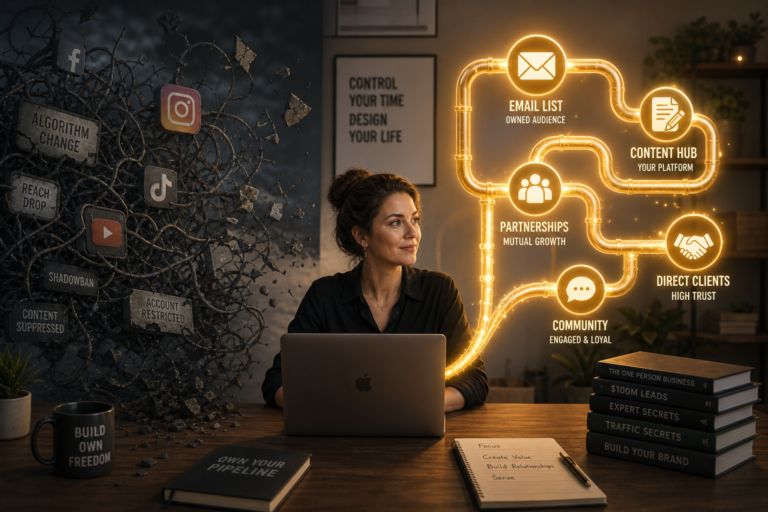
- private platforms to replace public‑platform dependency
- unified operating systems to replace tool overload
The future of work won’t be defined by big companies. It will be defined by small ones — run by one person, supported by AI, and stabilized by operations infrastructure.
The solo agency is not a trend. It’s the new default.